Table des matières
Un résident signale qu'un camion à ordures a heurté sa boîte aux lettres mardi matin. La télémétrie confirme que le camion était là à 7h42. La caméra du tableau de bord montre la route devant. La caméra orientée vers le conducteur montre le conducteur. Aucune ne montre la boîte aux lettres. La réclamation est acceptée.
Les caméras n'ont pas échoué, elles ont capturé exactement ce pour quoi elles étaient conçues. Le problème est qu'elles ont été conçues pour un travail différent. Les principales plateformes télématiques de flotte sont conçues autour de l'autoroute : le transport de marchandises sur longue distance, où la performance signifie les kilomètres, la vitesse et les heures d'arrivée. La collecte des déchets ne se fait pas sur les autoroutes. Elle se fait dans les ruelles et les rues résidentielles, où chaque arrêt est une opération mécanique effectuée à quelques centimètres des personnes, des animaux domestiques et des biens.
Fixez des outils orientés autoroute sur un camion poubelle et vous obtenez beaucoup de données, mais pas celles et l'analyse qui importent. L'écart se manifeste par des litiges, des coûts de contamination, des collectes manquées et des temps d'arrêt évitables. Cette incertitude érode les marges d'une manière qui ne transparait jamais complètement dans un seul rapport. Pour protéger le résultat net, voici comment les gestionnaires de flotte doivent passer de la “ supposition ” à la “ connaissance ”.”
La collecte des déchets est l'un des métiers les plus dangereux aux États-Unis selon la Bureau des statistiques du travail. Un grand nombre de ces décès impliquent le camion lui-même : accidents en marche arrière, virages serrés, heurts avec des piétons, chutes d'ouvriers.…
Ce n'est guère un problème de formation des conducteurs seulement. C'est aussi un problème de visibilité. Un camion de collecte standard, à chargement arrière, a d'énormes angles morts derrière lui. Les véhicules à chargement latéral ont des angles morts supplémentaires le long du trottoir. La plupart des systèmes de caméras de flotte ne sont pas suffisants pour minimiser ces angles morts. Les caméras axées sur la route et les conducteurs n'offrent pas une visibilité à 360 degrés. Lorsque quelque chose tourne mal, cette visibilité manquante devient une responsabilité.
La plupart des systèmes de caméras de tableau de bord pour flottes sont configurés avec deux positions de caméra : une face à la route, une face à la cabine du conducteur. Considérez ce que ces deux caméras ne peuvent pas voir :
Lorsque vous comblez ces lacunes en matière de visibilité, la “ taxe d'incertitude ” disparaît. Les réclamations sont résolues par des preuves plutôt que par des indemnisations, et les enquêtes s'appuient sur des images plutôt que sur la mémoire.
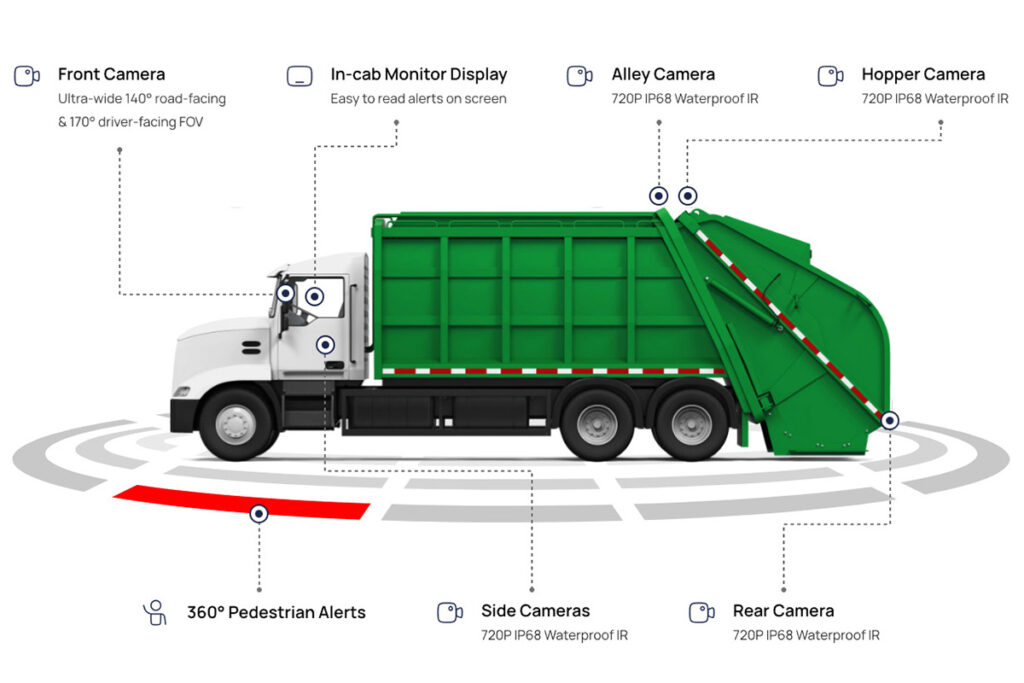
Chacune de ces zones non couvertes représente une responsabilité réelle. Lorsqu'un résident dépose une réclamation pour dommages alléguant que votre camion a heurté sa boîte aux lettres, la question n'est pas de savoir si vous avez des caméras, mais si vous avez les bonnes images sous le bon angle. Sans cela, vos options sont de payer la réclamation ou de vous battre sans preuves suffisantes.
Les assureurs l'ont déjà compris. Les primes pour la flotte de gestion des déchets ont augmenté de 10 à 40% ces dernières années, et les souscripteurs s'intéressent de plus en plus aux caméras de flotte et aux données télématiques.
A configuration de la visibilité de la flotte spécifique aux déchets qui comprend plusieurs caméras et angles, dont une caméra d'angle à 45 degrés, une caméra de recul et des caméras latérales, n'améliore pas seulement la sécurité, elle minimise également les calculs de responsabilité. Les réclamations sont résolues avec des preuves au lieu de paiements, et les enquêtes s'appuient sur des séquences plutôt que sur la mémoire.
Au-delà de la sécurité physique, les systèmes génériques permettent aux revenus de s'échapper du silo et du parc.
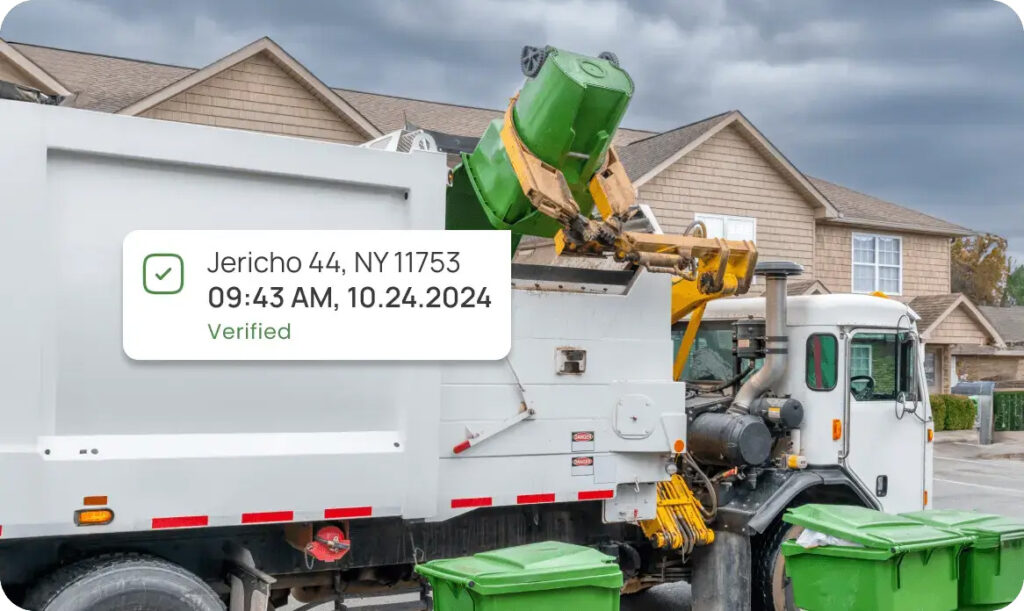
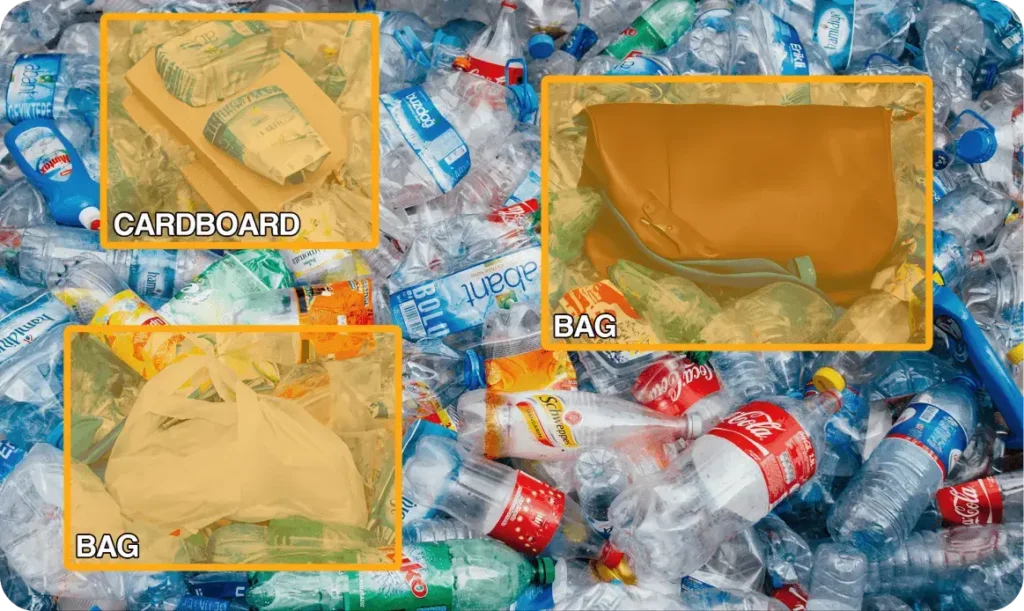
Un seul camion de ramassage contaminé peut entraîner des coûts d'élimination, des cargaisons refusées et une exposition réglementaire. Sans preuve vidéo et documentation, il est presque impossible de récupérer ces coûts. L'identification des contaminants conçue à cet effet change la donne en créant un enregistrement de ce qui a été réellement collecté. Lorsque les données sont liées à un horodatage et à une localisation GPS, les poubelles débordantes ou les matériaux interdits sont entièrement documentés, permettant de facturer les dépassements en toute confiance et de résoudre les litiges en quelques minutes plutôt qu'en quelques jours.
Dans les opérations de bennes basculantes, le conteneur a souvent plus de valeur que les données kilométriques du camion. La télémétrie standard perd souvent la trace de ces actifs une fois qu'ils arrivent chez un client. Sans un suivi précis du temps de séjour, les conteneurs restent inactifs sur les sites de chantier bien après la fin du cycle de location, nuisant ainsi silencieusement à l'utilisation des actifs. En bref, si vous ne savez pas exactement combien de temps un conteneur est resté en place, vous perdez la capacité de convertir cet actif pour le prochain client payant. Un suivi efficace transforme l'acier “perdu” en revenus actifs.
Les systèmes télématiques standard suivent l'activité des véhicules mais indiquent rarement qui conduisait le véhicule lors d'un incident. Dans de nombreuses flottes de déchets, les véhicules sont partagés par plusieurs conducteurs le même jour ou utilisés par des travailleurs saisonniers.
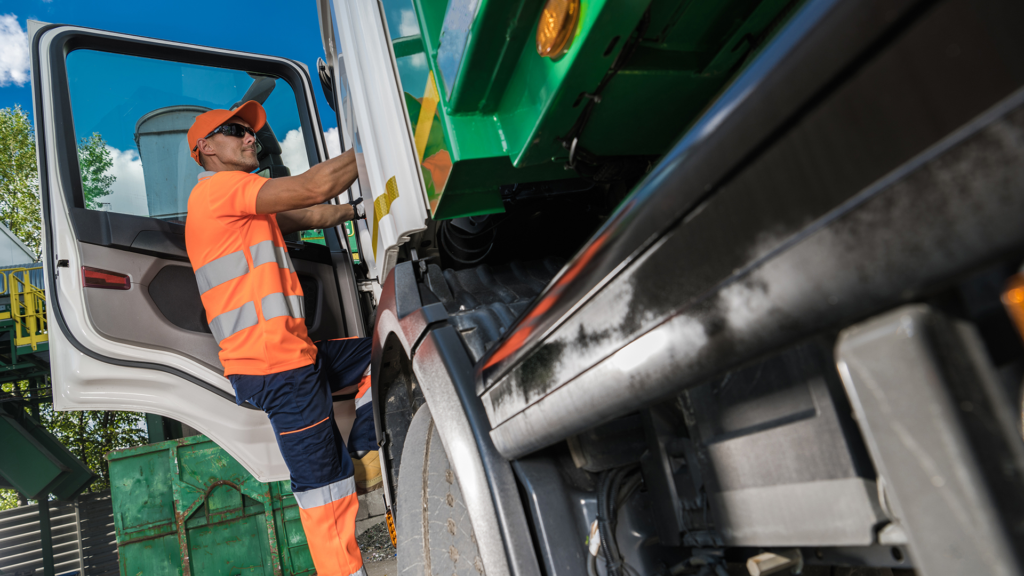
La vérification de l'opérateur par reconnaissance faciale résout ce problème. Lorsqu'un chauffeur monte dans la cabine, le système vérifie son identité avant même que le véhicule ne démarre.
Les flottes de gestion des déchets opèrent au grand jour. Un incident unique devenu viral ou un trajet manqué qui attire l'attention du conseil municipal engendre des coûts qui n'apparaissent sur aucun tableau de bord. Les récents cas couverts par les médias soulignent à quelle vitesse les problèmes opérationnels peuvent devenir publics et engendrer des pressions politiques. Disposer d'une “vérité” numérique pour chaque arrêt protège la réputation de la flotte. Vous n'avez plus à espérer que le chauffeur se souvienne correctement de sa tournée du matin ; vous disposez des preuves pour démontrer que le travail a été bien fait.
La pression est structurelle. Les transporteurs privés sont confrontés à des examens de renouvellement de contrats municipaux et à des appels d'offres concurrentiels. Les enlèvements manqués et les litiges de service créent des frictions opérationnelles constantes qui érodent les marges et la réputation.
Les systèmes télématiques standards captent les mouvements, mais ne répondent pas toujours aux questions qui importent aux propriétaires de flottes de collecte de déchets :
Ces réponses ont des conséquences financières. Les déplacements de rappel pour les ramassages contestés sont estimés à$60- $150 chacun. Les réclamations pour dommages non contestés vont de centaines à des milliers de dollars. Les augmentations de taux d’assurance dues à une documentation de sécurité inadéquate s’accumulent chaque année. Les frais de contamination qui ne sont pas facturés faute de piste de données.
Aucun de ces coûts n'est catastrophique isolément, mais ensemble, ils représentent un frein significatif à la rentabilité. Les solutions télématiques visent à remédier à ces inefficacités, mais seule une plateforme conçue à cet effet peut les éliminer à la source.
Les gestionnaires de flottes de déchets doivent s'assurer que ces capacités sont incluses dans leur système de télématique :
Chaque angle de caméra manquant est un angle mort. Chaque arrêt de service non vérifié est un conflit potentiel. Chaque opérateur non identifié est un point d'interrogation. Chaque chargement contaminé non facturé est laissé sur le trottoir.
L'intelligence de flotte dans le monde réel ne vise pas à atteindre la perfection ; elle vise à minimiser le chaos d'un mardi matin. C'est la différence entre un gestionnaire de flotte qui commence sa journée à défendre une réclamation pour dommage “ fantôme ” et un gestionnaire qui se contente d'envoyer un lien vidéo au réclamant et de passer à la tâche suivante.
Cet article vous est proposé par Forward Thinking Systems, offrant des solutions complètes de gestion de flotte avec des capacités spécifiques adaptées défis des flottes de collecte des déchets.
Messages récents
Catégories
Rester en contact


Prêt à rendre la gestion du parc automobile plus facile à gérer ?