In the bustling world of logistics, where trucks carry the economy’s backbone, accidents are an unfortunate, but common, occurrence. When these happen, insurance claims inevitably follow. But how has the advent of truck dash cams influenced this process? And how can your business save on insurance?
Today, we’ll explore how truck dash cams have transformed the way insurance claims are processed. Buckle up, and let’s get into it.
Before we hit the road, it’s worth understanding what truck dash cams are and why they’re making headlines.
Truck dash cams are compact devices mounted on the dashboard or windshield of trucks. They record the view through the vehicle’s front windshield, sometimes the rear or other windows, and often the cab interior. A dash camera’s primary use is for monitoring and recording events on the road and driver behavior.
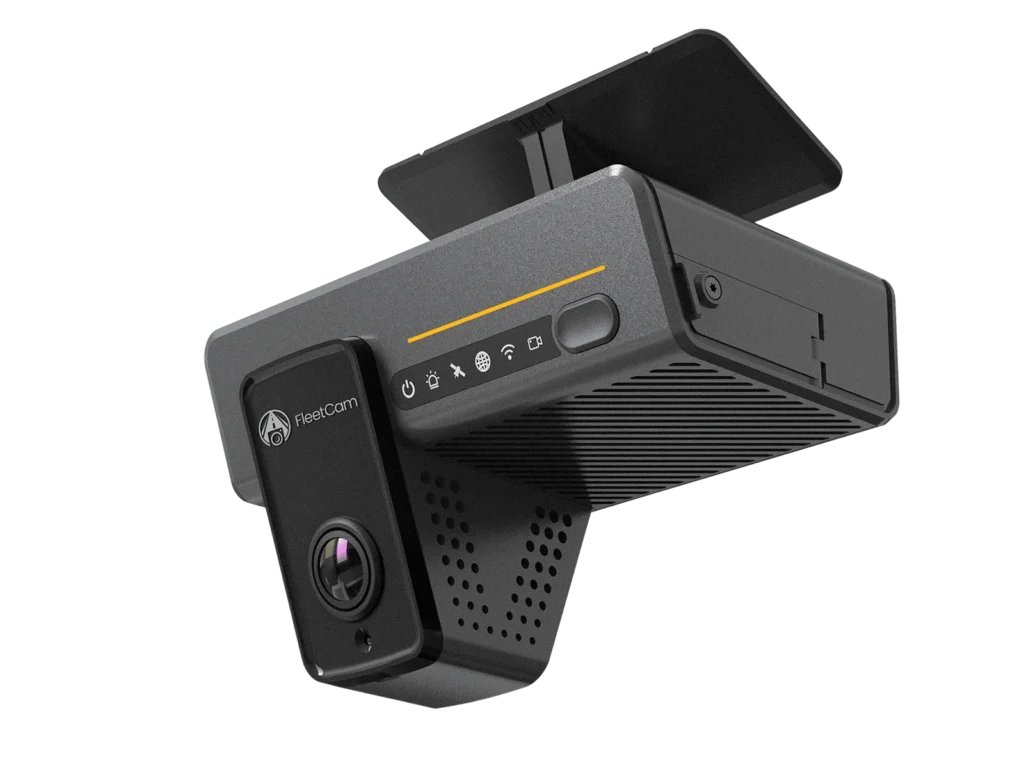
Dashboard cameras aren’t new to the scene. They’ve been around for a while, but their use in commercial trucks is a relatively recent trend. So, why the sudden rise in popularity?
According to a 2019 survey from C.J. Driscoll & Associates “Of the fleets we surveyed (both for-hire and private), 44% of fleets reported using video cameras on at least some of their trucks.” And insurers see the value too: in a 2023 study by the American Transportation Research Institute (ATRI), insurers reported that driver-facing camera footage exonerates truck drivers in 52% of claims, and a majority saw a 10% to 45% decrease in claims among fleets that installed the cameras. Some insurers offer premium discounts for camera-equipped fleets; the bigger payoff is fewer, better-defended claims.
With features like advanced driver assistance system (ADAS) and driver monitoring system (DMS) alerts, dash cams can provide safety feedback in real time, making drivers more likely to reach their destination without incident. It’s like having a virtual co-pilot that never sleeps, keeping a helpful eye on the road at all times. FleetCam, our AI dash camera system, delivers that feedback in the cab the moment it matters.
Dash cam footage is a treasure trove of real-world scenarios for driver training, providing an invaluable resource for trainers to showcase the do’s and don’ts of driving. DriveShield, our automated driver coaching system, takes it further, turning flagged events into assigned coaching automatically.

The influence of truck dash cams on insurance claims cannot be overstated. They have changed how claims are handled, bringing transparency and fairness to the process.
With clear video evidence at hand, insurance companies no longer need to rely solely on statements and police reports. This has greatly expedited the claim processing time. FleetCam uploads safety events to IntelliHub, our fleet management platform, as they happen, so the clip an adjuster needs is ready in minutes, not when the truck gets back.
Fraudulent claims can be a real thorn in the side of insurance companies. However, with the objective witness of a dash cam, these can be effectively curbed. For example, one Tennessee-based company was able to exonerate its driver with dash cam footage, defeating a $150,000 claim, as reported by The Fuentes Firm, P.C., the law firm that defended the carrier. The firm does not identify the camera brand used.
When it comes to accidents, the blame game is never far behind. Truck dash cams help to cut through the noise, offering clear, objective evidence of what transpired.

While dash cam footage is a powerful tool, it also comes with its share of legal implications. Understanding these is crucial for both drivers and insurance companies.
Since dash cams can record video and sometimes even audio, they may potentially infringe on privacy rights. It’s important to be aware of the privacy laws in your jurisdiction. To do so, check out this helpful dash cam state laws article from FreightWaves.
The admissibility of dash cam footage in court varies across regions. While it’s generally accepted, certain criteria must be met for the footage to be considered valid. According to Jeremy Wang Law, most judges allow dash cam footage as evidence (so long as it is recorded in a public place). The footage must also be proven to have been recorded at the time of the event in dispute.
As technology advances, the role of truck dash cams in insurance claims is set to become even more significant. Future enhancements may include features like AI-powered accident prediction and prevention.
Truck dash cams have changed insurance claims for the better. By providing objective evidence, they speed up claim processing, deter fraudulent claims, and can mean fewer claims on your record altogether. FleetCam pairs that evidence with real-time driver alerts that help prevent incidents in the first place, with footage organized in IntelliHub when you need to make your case.
Recent Posts
Categories
Stay in Touch


Ready to make fleet management more manageable?