One isolated hours of service (HOS) violation does not establish a critical pattern, but one additional violation can trigger a Conditional safety rating. In a Federal Motor Carrier Safety Administration (FMCSA) compliance review, a pattern requires more than one violation of the same critical regulation and at least 10 percent of the records examined. An HOS pattern on its own produces a Conditional rating. Combined with other deficiencies, it can produce an Unsatisfactory rating.
A Conditional rating is public, and brokers can look it up before they book a load. So the one log that pushes a single violation type to the 10 percent line can be the difference between a clean review and a rating every broker may ask you to explain. This guide explains how the rating math works, what a Conditional rating does to a carrier’s freight, how to get the rating upgraded, and how to prepare for a compliance review before an investigator calls.
Table of Contents
A Conditional safety rating means FMCSA found that a carrier does not have adequate safety management controls in place to ensure compliance with the safety fitness standard, which could result in the safety problems listed in 49 CFR 385.5 (see the definitions in 49 CFR 385.3). FMCSA’s method for assigning ratings is written into federal regulations at 49 CFR Part 385, Appendix B. Here is how it works.
| Unsatisfactory Factors | Conditional Factors | Overall Rating |
|---|---|---|
| 0 | 2 or fewer | Satisfactory |
| 0 | More than 2 | Conditional |
| 1 | 2 or fewer | Conditional |
| 1 | More than 2 | Unsatisfactory |
| 2 or more | Any number | Unsatisfactory |
Calculate each critical violation pattern separately. Do not combine different violation types to reach 10 percent.
A simple example. These numbers are made up just to show you how the math works. Suppose an investigator examines 50 records of duty status. If 4 of them show an operator driving after the 14th hour, that is eight percent, which is below the threshold, so there is no pattern. If a 5th record has the same violation, that is 10 percent. Now it is a pattern, earns two points, the Operational factor becomes Unsatisfactory, and the carrier’s overall rating becomes Conditional if everything else in the review was clean.
That is why carriers sometimes say “one violation” cost them their rating. A single violation is never a pattern by itself, but one more bad log can be the one that crosses the line.
Safety scores and safety ratings serve different purposes. Compliance, Safety, Accountability (CSA) is FMCSA’s safety program. Its Safety Measurement System (SMS) uses carrier data to prioritize monitoring and investigations. SMS measures and percentiles do not constitute a safety rating or establish a carrier’s overall safety condition, and the SMS website itself warns that its data and alert symbols do not imply a federal safety rating. For more background, read our Compliance, Safety, Accountability guide.

A Conditional rating alone does not prohibit operation. The safety-rating prohibition in 49 CFR 385.13 applies to Unsatisfactory ratings. Carriers must still satisfy other operating requirements and comply with any separate order to stop operating. A United States-based carrier rated Conditional keeps its operating authority.
But the rating is public, and brokers check it. Anyone can look up a carrier’s rating on FMCSA’s Safety and Fitness Electronic Records (SAFER) system without logging in. Broker requirements vary. Ask each broker what corrective-action documents it needs to consider your carrier.
Why brokers care. In May 2026, the Supreme Court held in Montgomery v. Caribe Transport II that freight brokers can face state negligent hiring claims over the carriers they select. A Conditional rating is a public finding a broker may have to defend. For more on what the decision means for fleets, read Turn Your Fleet’s Safety Data into a Competitive Advantage.
Corrective action can keep the door open. In September 2026, a working group coordinated by Bluewire, a carrier risk company, published carrier selection guidelines that do not treat a Conditional rating as an automatic disqualifier. Instead, as FreightCaviar summarized, the guidelines recommend that brokers ask the carrier for documentation of the corrective actions it has implemented and, when applicable, evidence that it has submitted a corrective action plan or a request for a safety rating upgrade to FMCSA. That makes your paperwork after a review almost as important as the review itself.
There are two paths in the regulations.
Administrative review (49 CFR 385.15). Use this if you believe FMCSA made an error in assigning the rating. Your written request must explain the error and list the factual and procedural issues in dispute, with supporting documents. You must request it within 90 days of the date of the notice of your proposed rating (or within 90 days after FMCSA denies an upgrade request). Requests go in writing to FMCSA’s Adjudications Counsel, not to the Service Center.
Upgrade based on corrective action (49 CFR 385.17). Use this when you have fixed the problems the investigator found. You can ask for a rating change at any time, in writing, to the FMCSA Service Center for your region. Your request must include a written description of the corrective actions you took and evidence that your operations now meet the safety fitness standard.
Timing to keep in mind. Under 49 CFR 385.11, a proposed rating for most property carriers becomes final 60 days after the notice (45 days for passenger carriers and carriers hauling placardable hazardous materials). The regulations set firm FMCSA review deadlines only for carriers with Unsatisfactory ratings. There is no deadline written into the rule for reviewing a Conditional carrier’s upgrade request, so the best protection is to prepare a strong, well-documented request as early as possible.

This checklist focuses on HOS records for property-carrying fleets. A full compliance review also covers driver qualifications, vehicle maintenance, and other applicable requirements. For recordkeeping guidance, visit the ELD Resource Center.
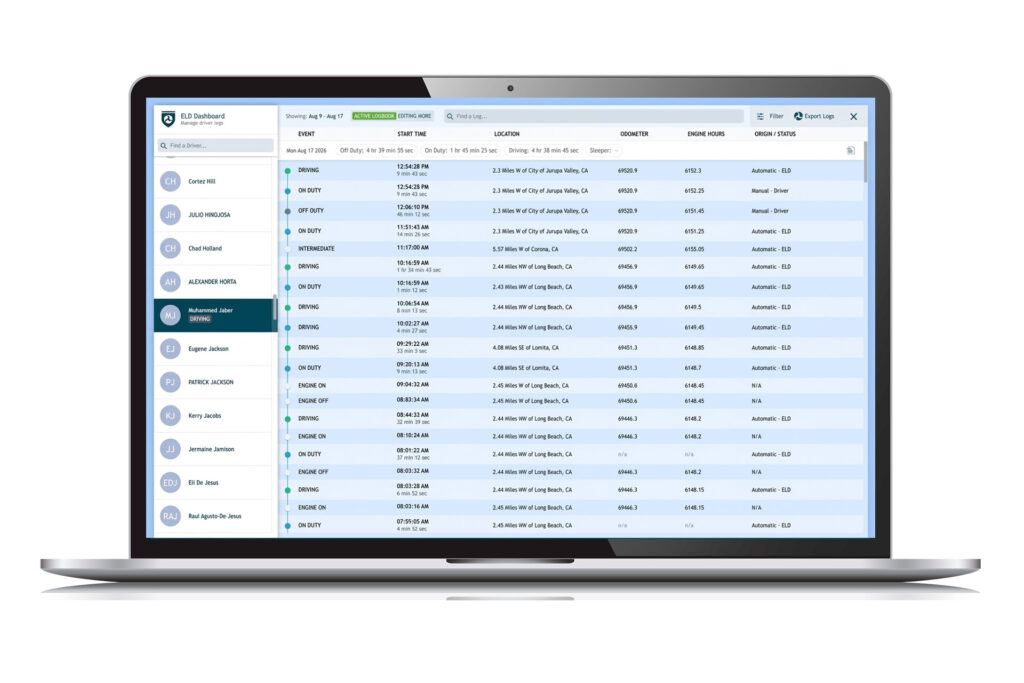
Keeping up with driver logs, unidentified driving, and record changes takes ongoing attention. An electronic logging device helps capture hours of service records, while fleet management software gives managers tools to review activity and follow up on discrepancies.
Field Warrior, our FMCSA-registered ELD, keeps those records in IntelliHub alongside the rest of your fleet data. Fleet managers can review driver activity and HOS, manage unidentified driving, compare original and modified logs, and suggest edits for drivers to review.
Yes. A Conditional safety rating does not by itself prohibit a carrier from operating under 49 CFR 385.13. Other operating restrictions can still apply. Brokers may require evidence of corrective action or decline to work with a Conditional carrier under their own selection policies.
One additional hours of service violation can create a critical pattern if the same critical regulation is violated more than once and in at least 10 percent of records examined. That pattern earns two points in the Operational factor. The overall rating is Conditional if the other factors are Satisfactory.
Fix the deficiencies identified by FMCSA and document the corrective actions. Submit a written upgrade request to the regional Service Center under 49 CFR 385.17. If the rating was assigned in error, request administrative review under section 385.15 within 90 days of the date of the proposed rating notice.
No. CSA is an FMCSA program. Its Safety Measurement System uses safety data to prioritize carriers for intervention. The system does not assign a safety rating. Satisfactory, Conditional, and Unsatisfactory ratings are determined under 49 CFR Part 385.
No. An FMCSA-registered ELD supports recordkeeping. Compliance also depends on accurate duty status records, annotated edits, reviewed unidentified driving, retained records, and proper malfunction procedures. Carriers and drivers remain responsible for meeting those requirements.
This article is general information, not legal advice. Talk to a qualified transportation attorney or compliance professional about your specific rating.
Recent Posts
Categories
Stay in Touch


Ready to make fleet management more manageable?