While some fleet managers are still stuck in the old playbook, the smartest operators are quietly making moves that put them miles ahead of the competition. These aren’t revolutionary concepts, but simple, strategic shifts that deliver tangible results.
Here’s what the top-performing fleets are doing differently.
What everyone else is doing: Drowning in footage. Most fleets still require their safety teams to scrub through hours of video just to find the moments that actually matter.
What smart fleets do: They’ve switched to an intelligent, event-based video telematics system like FleetCam Pro that captures everything, and highlights the critical moments that really matter. With driver behavior being a leading contributing factor in commercial vehicle crashes, smart event-based recording is indispensable for safety teams.
AI and smart sensors flag unsafe driver behavior—like harsh braking, distracted driving, texting, tailgating, fatigue, and more. When an event is detected, FleetCam automatically saves multi-angle video clips (from up to six cameras) and organizes them by event type, date, vehicle, and driver. Critical events are uploaded and notifications sent to managers for fast review—no digging required.
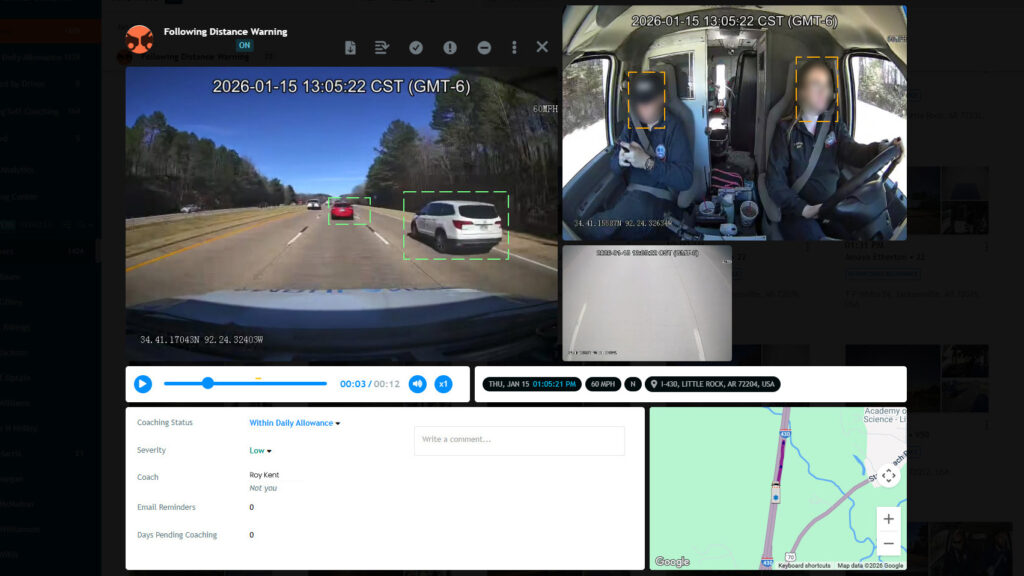
And for an even faster, high-level view, the Time Lapse feature condenses entire trips into short, accelerated videos—perfect for spotting patterns and reviewing routes without watching hours of footage.
The real impact: Incident reviews that used to take hours now take minutes. Safety managers spend less time scrubbing through video and more time on meaningful work—analyzing trends, coaching drivers, and improving fleet performance. With fewer blind spots and faster access to key events, every team member becomes more effective.
What everyone else is doing: Installing in-cab cameras and leaving drivers completely in the dark about what’s being captured, how it’s used, and how it affects them. Drivers feel like they’re being watched, judged, and micromanaged—so they disengage, push back, or find clever ways to avoid the system.
What smart fleets do: They build trust through transparency. With FleetCam and DriveShield, drivers are part of the process—not just subjects of it. Every event is visible to the driver, who can review the video, see how it affected their score, and either self-coach or dispute it right in the app. Drivers see the same analytics as their supervisors, giving them a clear understanding of the events impacting their scorecard and where they can improve.
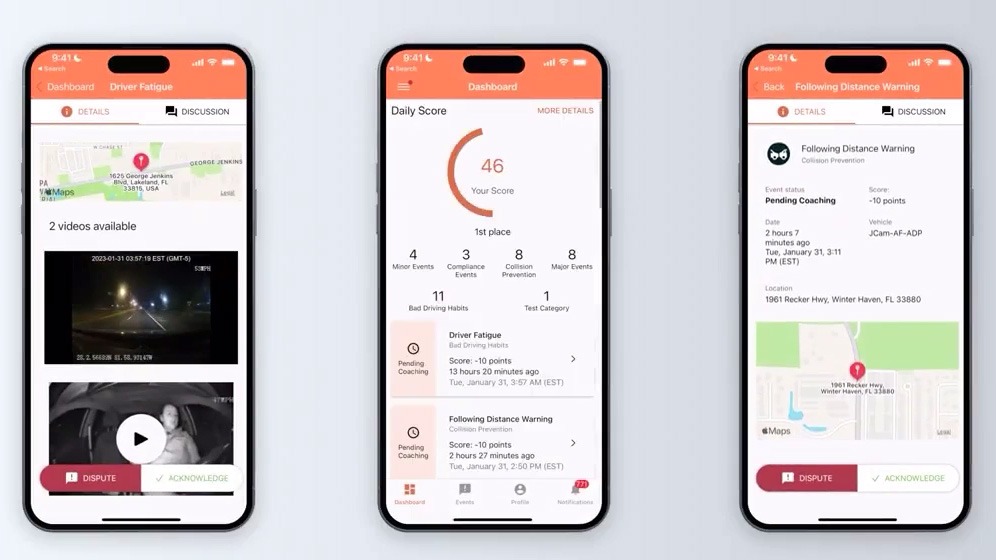
And because FleetCam’s AI-powered Driver Monitoring System detects fatigue, distraction, and phone use in real time, the driver-facing camera isn’t surveillance—it’s protection. In-cab audio-visual alerts coach drivers to self-correct in the moment, before a risky behavior becomes an incident. The camera is there to keep them safe, and DriveShield gives them the tools to learn from every event, self-correct, and get better.
The real impact: More engaged drivers, fewer repeat violations, and a culture of improvement over resentment. Supervisors spend less time micromanaging and more time recognizing progress or focusing on targeted coaching. And when patterns persist, built-in escalation paths—including LMS training courses and supervisor-led coaching—ensure no one falls through the cracks.
Just ask the pros. At Metro EMS, driver scorecards foster friendly competition and positive peer pressure to build a culture of safety where drivers celebrate success together. And at Inter-Metro Freight, drivers proudly share videos showcasing how they avoided incidents and safety managers use clips for one-on-one coaching to correct risky habits and reinforce positive behavior.
What everyone else is doing: Spending hours per vehicle with complex hardwired installs. For a large fleet, that’s hundreds of hours of downtime with trucks off the road, revenue on pause, and frustrated installers juggling cables and camera angles. With vehicle downtime and maintenance being among the largest operating costs for commercial fleets, fast, flexible installation is a strategic advantage.
What smart fleets do: They take advantage of flexible installation options that match their fleet’s needs. For fast deployment, FleetCam Pro’s OBD-II or JBUS plug-and-play connections can get vehicles camera-ready in under 30 minutes—no specialized installers required. For specialized vehicles or long-term deployments that need expanded multi-camera coverage with auxiliary cameras, a FleetCam Pro Hub, and an LCD screen, hardwired installations ensure a rock-solid, permanent setup.
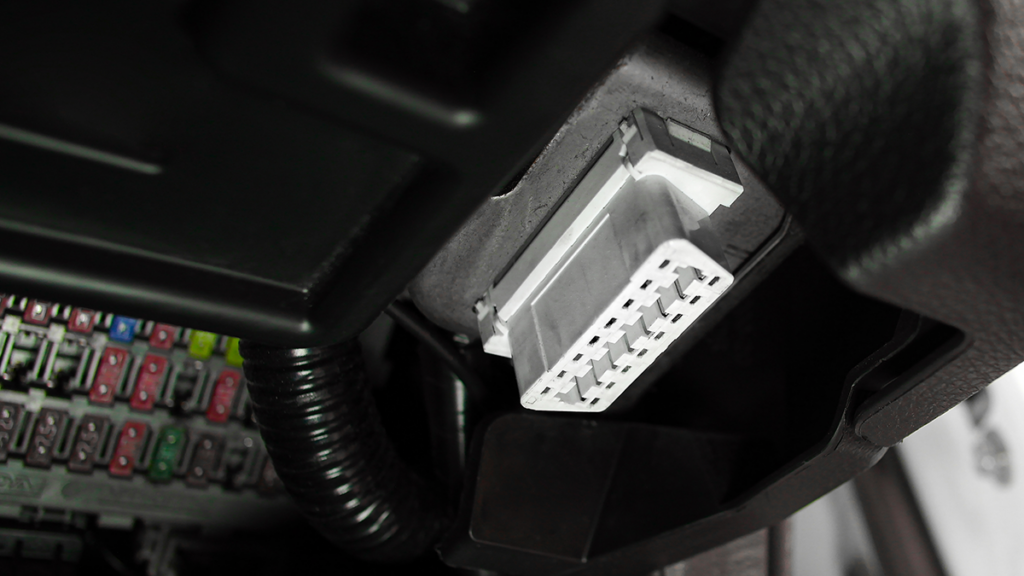
And this flexibility isn’t just about speed. OBD-II and JBUS connections unlock direct access to real-time engine and diagnostic data, including RPMs, fuel level, speed, odometer, DTC codes, and even VINs—without any extra hardware.
The real impact: You get the base of your fleet protected in days, not months, and scale up from there. Fast-deploy vehicles are on the road generating data immediately, while your specialized units get the full multi-camera treatment on a timeline that works for your operation. Either way, you get access to more than just video—smarter alerts, automated maintenance tracking, and a faster return on investment without disrupting your entire fleet at once.
What everyone else is doing: Paying sky-high cloud storage fees to upload and archive terabytes of routine footage, most of which no one will ever watch. Some fleets are dropping thousands each month just to store uneventful highway miles in someone else’s cloud.
What smart fleets do: They use a smart, event-driven approach that puts the right footage in the right place. All footage is recorded and stored locally on the vehicle with dual SD card redundancy—so routine driving is always preserved and protected, even if one card fails. When an event is detected, FleetCam automatically uploads the clip to IntelliHub for fast review, coaching, and action. The critical stuff gets to managers immediately. The rest stays safely onboard until you need it.
Need to pull historical footage? Use Remote Wake to access the dashcam anytime—even if the vehicle is parked and powered down. Stream live or historical video directly from the device, then download any clips you want to keep. You decide what’s worth pulling and where to store it.
The real impact: Fleets eliminate the bloated cloud bills that come from uploading everything, while keeping complete footage on the vehicle and instant access to the events that matter. No lost footage. No surprise storage invoices. Just smarter storage that works the way fleet managers actually need it to.
What everyone else is doing: Juggling separate systems for safety, GPS, maintenance, and dispatch—none of which talk to each other. Safety events live in one portal, vehicle diagnostics in another, and tracking data somewhere else. It’s like running a business in three different languages.
What smart fleets do: They run everything through a centralized fleet management platform that provides a single-pane view into the entire ecosystem—dashcam, driver coaching, fleet and driver analytics, vehicle diagnostics, GPS tracking, maintenance alerts, PTO status, sensor data, and more.
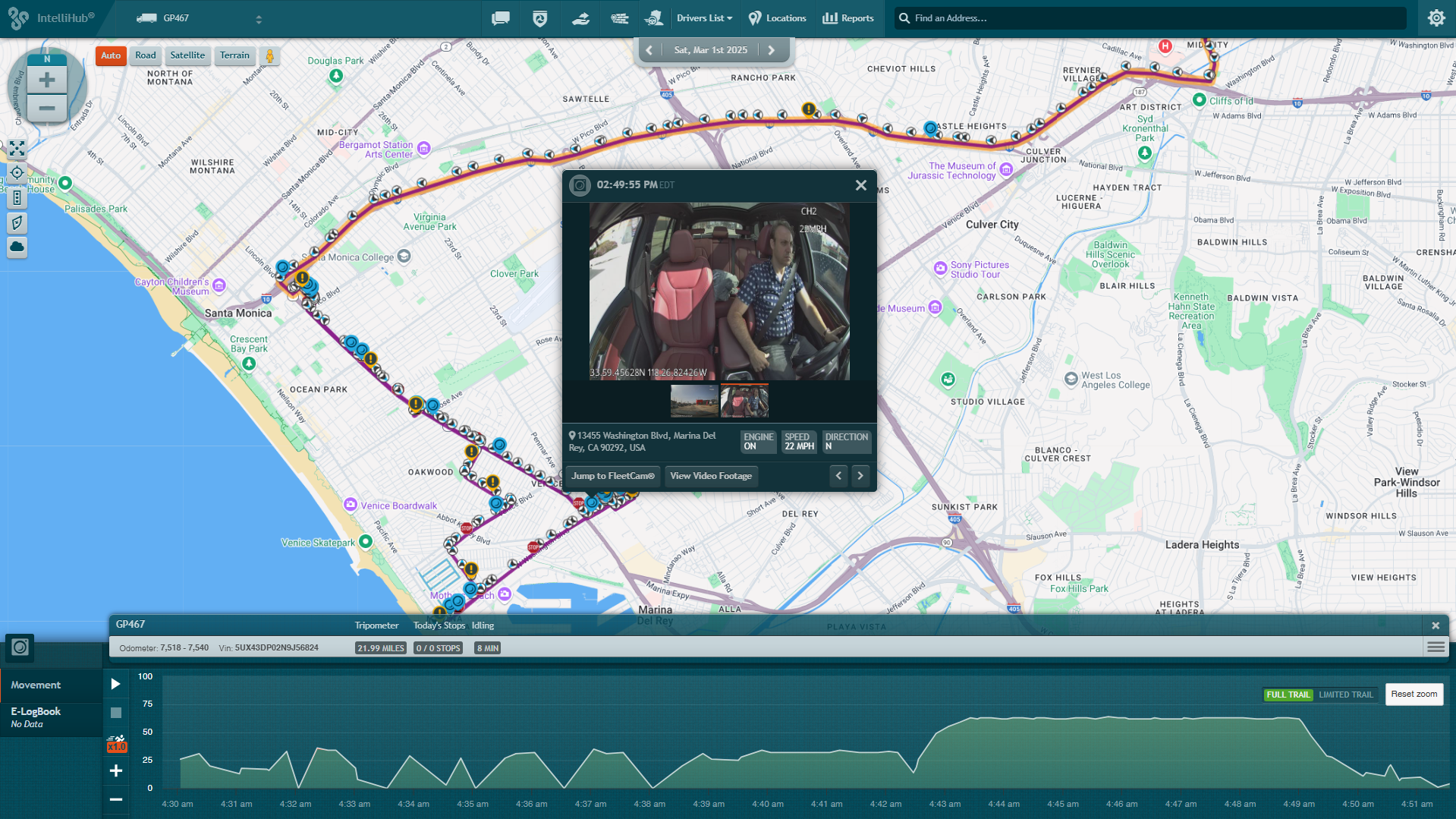
FleetCam captures and organizes high-impact safety events. DriveShield empowers drivers to self-coach and engage with their scorecards. And IntelliHub ties it all together—so you can track vehicles, stream video, monitor behavior, pull engine diagnostics, manage exceptions, and generate fleet reports from a single login.
The real impact: Decision-making gets faster and smarter. Managers aren’t wasting time switching between tabs or piecing together disconnected data. They’re seeing the full picture in one place. Safety, compliance, maintenance, and performance are now connected, automated, and actionable—and all backed by a single, dedicated support team that knows your entire system inside and out.
Smart fleets know one change has limited impact, so they’re stacking smart moves that amplify each other. Event-based video builds driver trust. Trust drives engagement. Engagement reduces incidents. Fewer incidents cut costs, boost safety scores, and strengthen customer relationships.
And they’re not waiting around. While others stall in meetings, smart fleets are already rolling out the tools that work. The gap is growing fast, and catching up gets harder every day. Don’t get left behind while your competitors are making moves. Join the Smart Fleet Club.
Recent Posts
Categories
Stay in Touch


Ready to make fleet management more manageable?